
Asking someone to officiate your wedding is one of the most personal questions you'll ask during the whole planning process. You're not just giving them a role. You're asking them to stand next to you at the most important moment of the day and say the words that make you married.
So it makes sense to ask in a way that feels as meaningful as the role itself. Below you'll find what to check before you ask, eight officiant proposal ideas (with how to actually pull each one off), what to put in an officiant proposal box, card wording you can copy, and answers to the questions couples ask most.
Before You Ask: 5 Things to Check
- Make sure they can say no. Some people love public speaking; others would rather do anything else. Ask in a way that leaves room for an honest answer, especially if the question comes with a gift. A simple "no pressure, we'll understand" in the card goes a long way.
- Check the legal side in your state. In the U.S., officiant rules vary by state. Many states accept online ordination; some add registration steps, a few have other options, and the details can change. Check with the county clerk where you'll get your license, so you can tell your friend exactly what's involved.
- Ask early. Ideally six months or more before the wedding. Your officiant will need time to get ordained or registered, meet with you, write the ceremony and practice it.
- Be clear about what you're asking. Will they write the ceremony, or will you give them a script? Do you want them at the rehearsal? Will they handle the marriage license? Clear expectations make it easier to say yes.
- Think about the costs. Online ordination is often free, but registration fees, a printed copy of their credentials, travel or a hotel can add up. Tell them up front that you'll cover anything the role costs them.
8 Officiant Proposal Ideas
1. A handwritten letter
The simplest idea is often the most moving, and it's the one people keep. Don't worry about length. A good letter has four parts: a specific memory you share, why you thought of them first, what it would mean to hear the vows in their voice, and the question itself. Close with a line that gives them an easy way out if it's not for them.
Best for: the friend who saves cards and rereads them years later.
2. The "Will you marry us?" card
A classic for a reason. The play on words makes people smile, and it works whether you hand it over in person or send it in the mail. You can find printed versions on Etsy or make your own. Whatever card you choose, write a few personal lines inside so it doesn't feel like a template.
Best for: anyone, and as the centerpiece of a proposal box.
3. An officiant proposal box
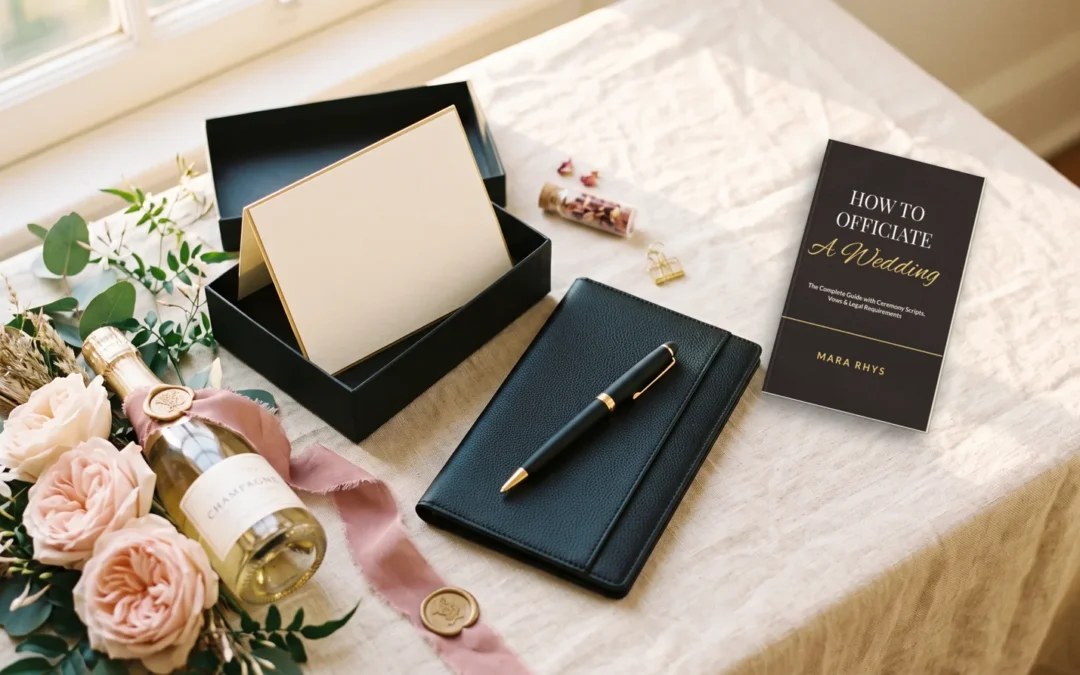
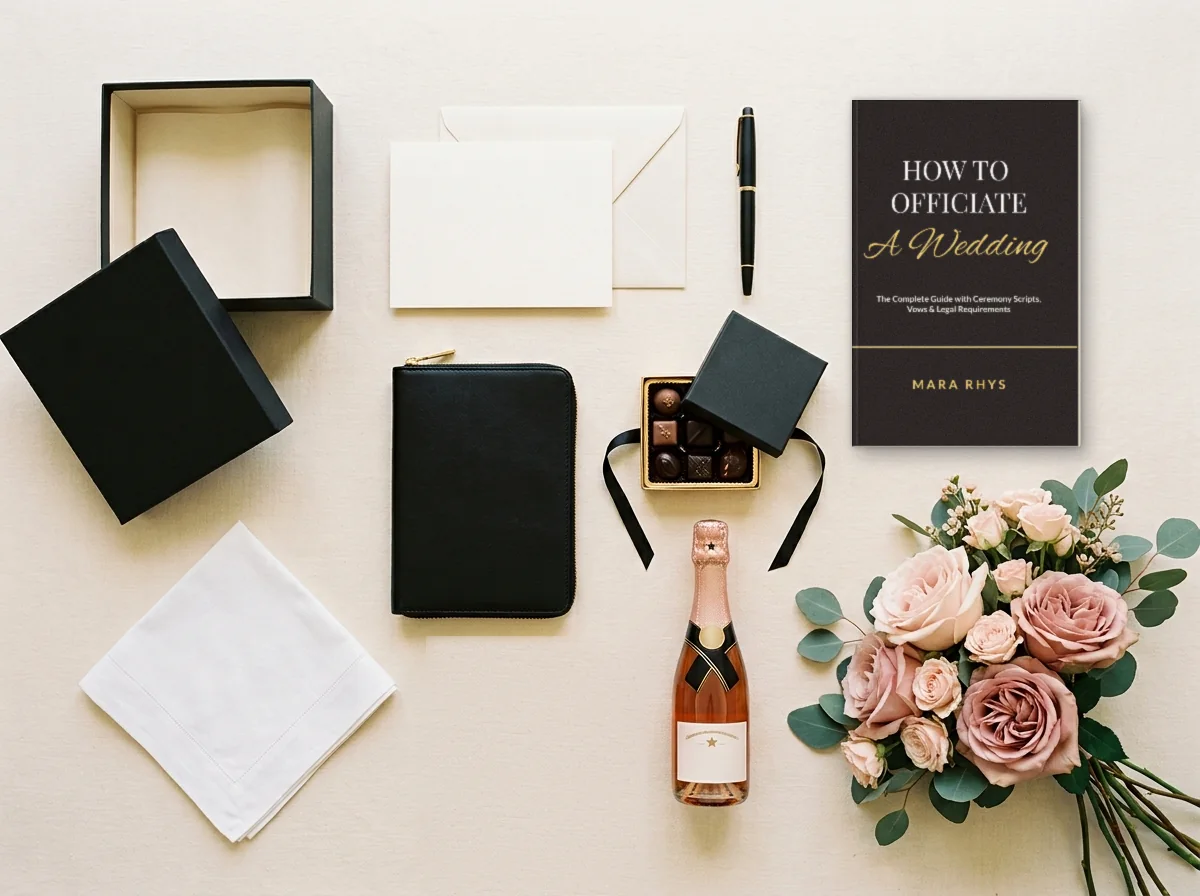
A small box with the card, something practical for the role and a treat to celebrate. It turns the question into a moment, and everything inside is useful later. You don't need to fill it: four or five well-chosen things look better than a box of filler. (See exactly what to put inside below.)
Best for: the friend who loves a gift and a bit of ceremony.
4. Ask over dinner
Invite them for dinner or drinks and ask in person, maybe with a toast. Ask before dessert, not at the very end, so there's time to talk about it once the surprise wears off. Bring a card anyway: they'll want something to keep, and it gives them the details in writing.
Best for: the sentimental friend who would want to see your faces when you ask.
5. Pair the question with a practical guide
Most first-time officiants say yes and then panic about three things: the legal paperwork, what to actually say, and standing in front of everyone they know. If your friend has never officiated before, a guide that covers all three shows you've thought about what you're asking and that they won't be figuring it out alone. It also takes the edge off a yes they might otherwise hesitate over.
Best for: the friend who'd say yes but worry about getting it wrong.
6. A personalized officiant binder
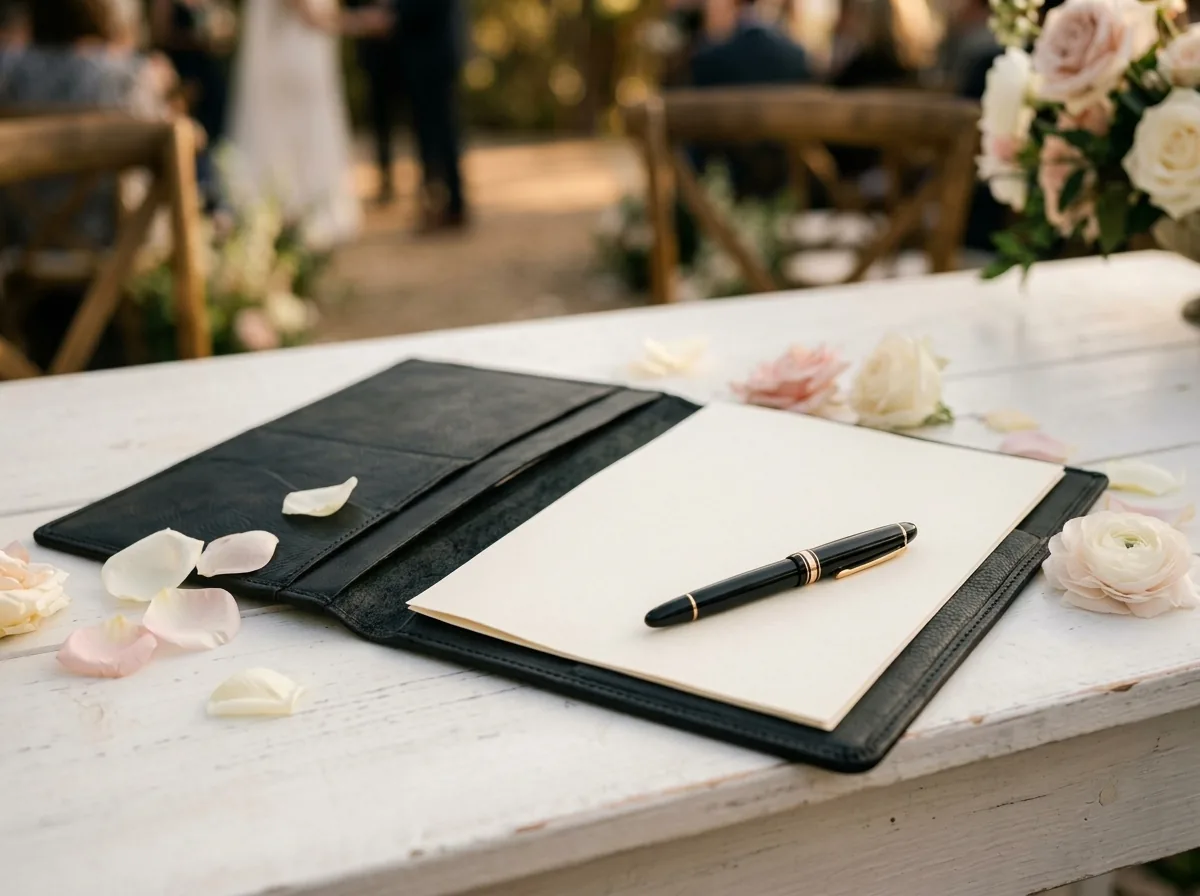
Officiants read from a printed script, and a phone or loose sheets of paper look out of place at the altar. A binder or folio keeps the script tidy and looks good in photos. Look for one that opens flat, is easy to hold in one hand and comes in black or a neutral color that works with any outfit. Add their name or your wedding date to the cover with custom lettering, and slip a first page inside with the question.
Best for: the organized friend who likes things done properly.
7. A scratch-off or puzzle card
For a playful friend, make them work for the question. A DIY scratch-off is easy: write "Will you marry us?" on a card, cover the words with clear packing tape, then paint over the tape with two coats of a mix of acrylic paint and a little dish soap. Once it dries, it scratches off with a coin. For a puzzle, order a small custom jigsaw printed with a photo of the three of you and the question across it.
Best for: the friend with a sense of humor who'll want to film the reveal.
8. A video call plus a box in the mail
For long-distance friends, mail the box about a week ahead and label it "Don't open until we call." Then open it together on a video call so you can still see their reaction. If you'd like to keep the moment, ask before you start recording.
Best for: the friend who lives far away but should still be part of it.
A gift that actually helps
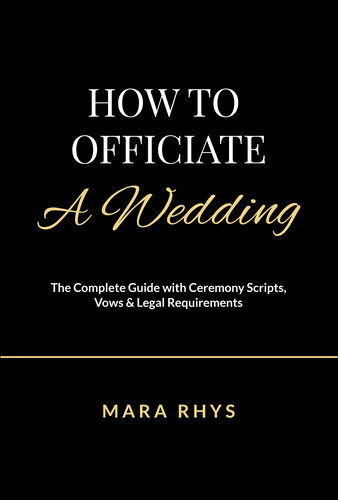
How to Officiate a Wedding is a step-by-step guide for first-time officiants: five complete ceremony scripts, vow templates, ring exchange and pronouncement wording, and quick-reference legal cards for all 50 states and D.C.
What to Put in an Officiant Proposal Box
You don't need much. A few thoughtful, useful things are better than a box full of filler:
- The card with your question (see examples below).
- A practical guide for first-time officiants.
- A good pen: they'll need it to sign the marriage license. Choose black ink, which many counties ask for.
- A binder or folio for the ceremony script.
- A small treat: a bottle of something bubbly, their favorite coffee or chocolate.
- A short info note with the date, the venue and what you're asking them to do.
If you want to add one more thing, make it personal rather than bigger: a photo of the three of you, or a handkerchief with a note that says "for when you get emotional up there."
What to Write in Your Officiant Proposal Card
Here are five examples you can adapt. Keep it personal: one specific detail about your friendship says more than a long message.
Heartfelt
"You've been there for every chapter of our story, so we can't imagine anyone else standing with us when we start the next one. Will you officiate our wedding?"
Playful
"We have a very important question for you… Will you marry us? (Legally speaking.)"
Short and sweet
"There's no one we'd rather have marry us. Will you officiate our wedding?"
For the friend who introduced you
"You started all of this. It only feels right that you're the one to make it official. Will you marry us?"
For a sibling
"You've known me longer than anyone, and you've seen every version of me. We'd love for you to be the one standing beside us. Will you officiate our wedding?"
Whatever you write, add a P.S. that takes the pressure off: "If public speaking isn't your thing, just tell us. We'll love you just the same."
After They Say Yes
Once your officiant has said yes, help them get started:
- Share the legal steps for your state, including ordination and any registration.
- Set up a time to talk about your story and the tone you want for the ceremony.
- Agree on who handles what: the script, the rehearsal and the marriage license.
- Send them what they need to start writing. If they've never written a ceremony, point them to this guide on how to write a simple wedding ceremony script and this one on what a wedding officiant says.
- Send them a checklist so they know what to do and when.
Send your officiant the free checklist
A printable checklist for first-time officiants, from getting ordained to signing the marriage license. Download it and tuck it into your officiant proposal.
No spam. Unsubscribe anytime.
Officiant Proposal FAQ
How far in advance should you ask someone to officiate?
Six months or more is ideal. Three months is about the minimum, because some states require registration or paperwork that takes time to process, and your officiant still needs to write and practice the ceremony.
Do you pay a friend to officiate your wedding?
Usually not, but you should cover any costs the role creates: ordination or registration fees, travel and a hotel if they're coming from out of town. After the wedding, a thank-you gift and a handwritten note are a nice touch.
Can any friend officiate a wedding?
It depends on your state. Many states let a friend officiate once they're ordained, including online. Some have extra registration steps, and a few offer other routes, such as a one-day designation. Always confirm with the county clerk where you're getting your marriage license.
What if they say no?
Thank them for being honest and don't take it personally. Officiating means public speaking and legal responsibility, and not everyone is comfortable with both. You can still give them another meaningful role, like a reading or witnessing the license.
Should the officiant be invited to the rehearsal dinner?
Yes. Your officiant will usually lead the rehearsal, so invite them (and their partner) to the rehearsal dinner too.
The Best Officiant Proposals Are Personal
Whether you write a letter, put together a box or simply ask over coffee, what matters is that your friend knows why you chose them. The rest is just wrapping.
Help them feel ready from day one
Saying yes is the easy part. How to Officiate a Wedding walks your friend through everything that comes after, from the paperwork to the moment they say "I now pronounce you," so they can enjoy the role instead of worrying about it.